Skip to content
Uneven texture, fine lines, and skin that has lost some of its natural firmness are common concerns, but figuring out which treatment actually addresses them best can feel like its own research project. With so many advanced skin rejuvenation options available, two names keep coming up for people seriously comparing their choices.
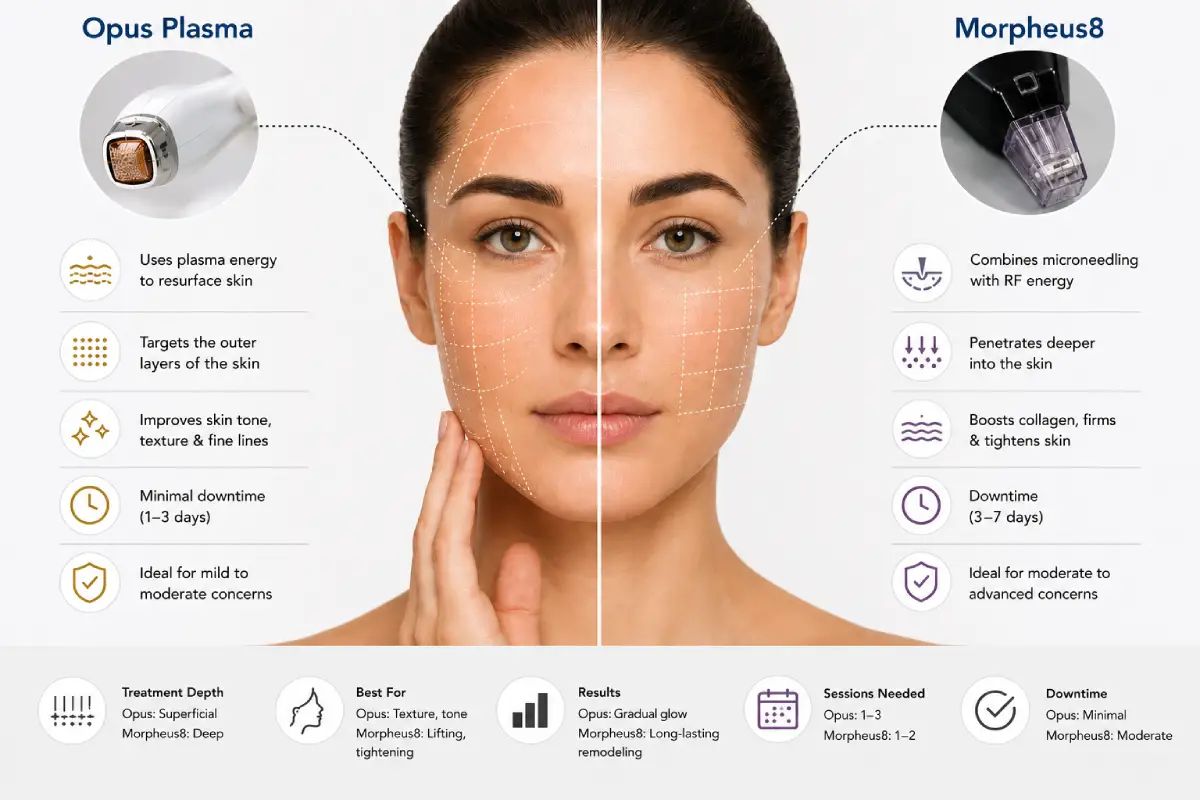
At Soleil Medical Spa, Opus Plasma vs Morpheus8 are two of the most frequently compared treatments, and for good reason. Both promise meaningful improvement in skin quality, but understanding how they actually differ helps you choose the option that fits your specific goals rather than picking based on name recognition alone.
What is the main difference between Opus Plasma and Morpheus8?
Opus Plasma uses fractional plasma energy to resurface and tighten skin. At the same time, Morpheus8 combines radiofrequency energy with microneedling to stimulate deeper collagen remodeling, making each better suited to slightly different skin concerns.
What Sets These Two Treatments Apart
A fractional plasma technology called Opus Plasma was created to address common skin quality issues, such as wrinkles, uneven texture, and irregular pigmentation. It is a powerful solution for texture and tone in particular because it provides tailored, precisely targeted treatments that reach the skin’s surface and just beneath it.
Morpheus8 takes a somewhat different approach, combining radiofrequency energy with microneedling to reach deeper layers of tissue. This combination is designed to stimulate more significant collagen remodeling, which tends to make it a popular choice for concerns involving skin laxity and deeper structural firmness rather than surface-level texture alone. Neither treatment is inherently better than the other in a general sense. They are simply built to address different layers of skin concern, which is why the more useful comparison is not which technology is superior, but which one lines up with what you are actually trying to improve.
How Each Technology Actually Works
Opus Plasma delivers plasma energy in a fractional pattern, treating a portion of the skin’s surface while leaving surrounding areas untouched to support faster healing. This approach encourages new skin cell turnover and helps address pigmentation and texture irregularities without requiring the deeper penetration that other treatments rely on.
Morpheus8 delivers radiofrequency energy directly into deeper layers of the dermis and, in certain protocols, subdermal fat using tiny needles. Because of its deeper delivery, Morpheus8 is often used for sagging or loss of definition rather than just surface texture, enabling it to address structural firmness and skin laxity more directly.
Opus Plasma vs Morpheus8: A Side-by-Side Comparison
| Feature | Opus Plasma | Morpheus8 |
| Technology | Fractional plasma energy | Radiofrequency microneedling |
| Primary Focus | Texture, tone, pigmentation | Skin laxity, deeper firmness |
| Treatment Depth | Surface and upper dermis | Deeper dermis and subdermal layers |
| Downtime | Moderate, typically several days | Moderate, typically several days |
| Best For | Uneven texture, fine lines, discoloration | Sagging skin, deeper collagen remodeling |
Both treatments are considered effective, well-established options for skin rejuvenation. The right choice often comes down to which specific concern matters most to you: texture and tone versus deeper structural firmness.
Benefits of Opus Plasma Worth Understanding
For patients who are more concerned with improving the quality of their skin than with treating severe laxity, Opus Plasma provides several unique benefits. Treatments can be precisely tailored to areas of concern, such as fine lines, uneven texture, or pigmentation irregularities caused by aging or sun damage.
Because Opus Plasma works in a fractional pattern, healing tends to be more predictable, with surrounding untreated skin supporting recovery in treated areas. This makes it a reliable option for patients who want meaningful improvement in how their skin looks and feels without committing to a more intensive treatment aimed primarily at deeper tissue firmness. Patients dealing with post-acne marks, sun-related discoloration, or general dullness often find Opus Plasma particularly well suited to their goals since the treatment was specifically engineered around these surface and upper-dermis concerns rather than bigger structural changes.
Which Treatment Fits Your Specific Concerns
If your main frustration is dullness, uneven texture, or pigmentation irregularities, Opus Plasma tends to be the more directly targeted option. Its fractional plasma technology was specifically designed with these surface and upper-dermis concerns in mind, making it a strong first choice for patients whose skin quality, rather than structural firmness, is the primary issue.
If sagging skin or a loss of definition along the jawline or cheeks is the bigger concern, Morpheus8’s deeper radiofrequency delivery may be worth discussing with your provider. Many patients also combine both approaches over time, addressing texture with one treatment while working on deeper firmness with the other as part of a broader skin rejuvenation plan.
Who Tends to Benefit Most From Each Option
Patients in their thirties and forties dealing with early texture changes, sun damage, or uneven tone often see strong results from Opus Plasma, since it targets these specific surface-level concerns effectively. Patients noticing more significant sagging or loss of facial contour, often in their forties and beyond, may find Morpheus8’s deeper approach better matched to their goals.
Neither treatment is exclusively tied to one age group, and skin type, individual concerns, and personal goals all factor into which option, or combination of options, makes the most sense. A consultation remains the most reliable way to determine which treatment, or combination, will address your specific skin concerns most effectively.
What Recovery Looks Like for Each Treatment
Both treatments generally involve a similar downtime window, with redness, mild swelling, and some sensitivity in the days following treatment. Following your provider’s aftercare instructions closely, including gentle cleansing and sun avoidance, supports smoother healing regardless of which treatment you choose. Results from both treatments tend to build gradually as collagen production increases over the following weeks, rather than appearing all at once immediately after your session.
Ready to Choose the Right Treatment for Your Skin?
Both Opus Plasma and Morpheus8 offer real, meaningful improvement for different skin concerns, and understanding what each one targets best takes the guesswork out of choosing between them. Whether your priority is smoother texture and tone or deeper structural firmness, a personalized plan makes all the difference in the results you can expect.
Book now with Soleil Medical Spa to get expert guidance on whether Opus Plasma, Morpheus8, or a combination of treatments best fits your skin goals. If you have questions before scheduling, feel free to contact our team, and we will help point you toward the right next step.